

 InfoSearched
Kara and Nate just solved the worst part of living out of a van.
Full-time travel vloggers Kara and Nate Buchanan spent months bouncing between crowded campgrounds and sketchy parking lots after converting to campervan life once pandemic restrictions grounded their usual overseas travel. In “We Discovered the SECRET to VAN LIFE!” they lay out the fix they stumbled onto: a membership network called Harvest Hosts that lets self-contained rigs park overnight on private vineyards, breweries, distilleries, and farms across North America instead of paying campground fees.
- Harvest Hosts connects RVs and campervans with independent host properties — wineries, breweries, distilleries, and farms — for free overnight parking.
- In exchange for the stay, guests are expected to support the host business directly: a wine tasting, a flight of beer, a farm tour, or locally made goods, rather than paying a campsite fee.
- The program is limited to fully self-contained vehicles, meaning rigs with their own bathroom and holding tanks, since most host properties don’t offer dump stations or hookups.
The Problem Harvest Hosts Actually Solves
Anyone who has tried to book a night at a state park campground in peak season knows the drill: sites sell out weeks in advance, and the fallback is a Walmart lot or a truck stop with generators running until midnight. Kara and Nate frame this as the single biggest headache of van life — not the driving, not the tiny kitchen, but simply finding somewhere safe and quiet to park once the sun goes down.
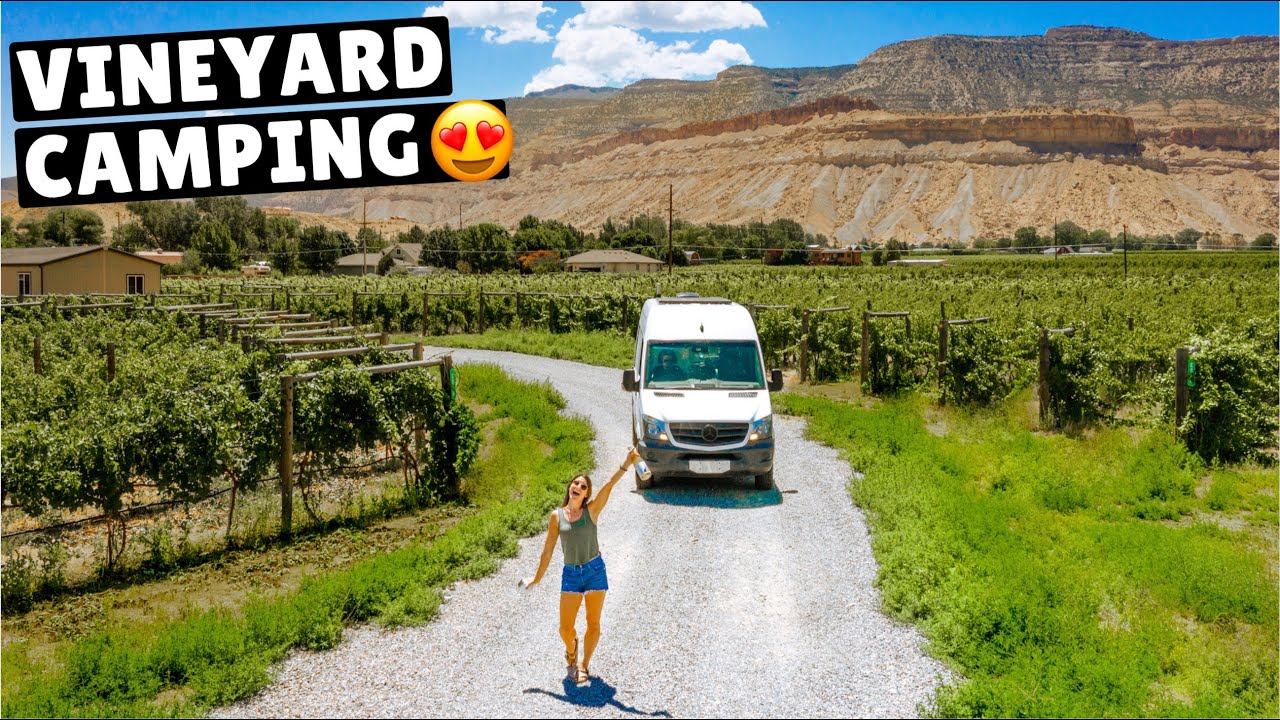
Harvest Hosts flips that search on its head. Instead of competing for a numbered site next to a dozen other rigs, members search a map of private host properties and request a stay directly through the app, often with just a day or two of notice. The couple’s own comparison in the video is blunt: a gravel commercial lot with traffic noise on one side, or a vineyard with a private view and a glass of local wine on the other.
Membership Access and Operational Mechanics
Harvest Hosts runs on an annual membership fee rather than a per-night rate, and there’s no cash payment to the host on top of that once you’re signed up. The unwritten rule is that guests spend roughly what a campsite would have cost anyway — buying a bottle from the winery, a growler from the brewery, or produce from the farm — so the property owner still profits from opening their land for the night.
Kara and Nate walk through the booking process on camera: pick a host near your route, send a request through the platform, and confirm arrival and departure windows directly with the property. Because these are working businesses and not campgrounds, hosts can decline a request or cap the number of rigs on a given night, so flexibility with timing matters more than it does at a paid campground.
Trade the noisy commercial lot for a night at the vineyard, and buy a bottle of wine instead of paying a campsite fee.
Strategic Alignment With Established Routes
The Buchanans had already logged serious mileage in the van before finding Harvest Hosts — the same rig they drove 1,461 miles across America earlier in their conversion life. That kind of cross-country pace is exactly where campground scarcity bites hardest, since booking ahead isn’t always realistic when the itinerary changes daily.
Being fully self-contained is what makes their van eligible for the program in the first place, the same setup that let them handle stretches like exploring the mountains of Colorado without depending on campground hookups. No dump station, no shore power, no problem — which is precisely the profile Harvest Hosts properties are built around.
The Trade-Off Worth Knowing
Harvest Hosts isn’t a replacement for every night on the road. Properties are spread unevenly — dense in wine country and the Midwest’s farm belt, thinner in remote stretches out West — and there’s no guarantee of a spot on short notice during harvest season or a busy tasting-room weekend. Kara and Nate treat it as one tool in the kit, mixed in with public land, campgrounds, and the occasional Walmart lot when nothing else lines up.
What sold them wasn’t just the free parking — it was the version of van life it produced: a private overlook at a vineyard instead of gravel and diesel fumes, and money spent on wine and cheese instead of a campsite invoice.






PALAWAN VOTED BEST ISLAND IN THE WORLD ???????? HERE’S WHY
Kandy Travel Guide | Sri Lanka’s Cultural Gem
Japan Revealed: Culture – Lonely Planet travel videos
Found Crystal Clear Swimming Spot in Florida! (Beware Alligators)
Downsides of Rv Life | Fulltime Rv Living | Things to consider before hitting the road