

 InfoSearched
Japan’s population is shrinking, and its young adults have simply stopped having sex.
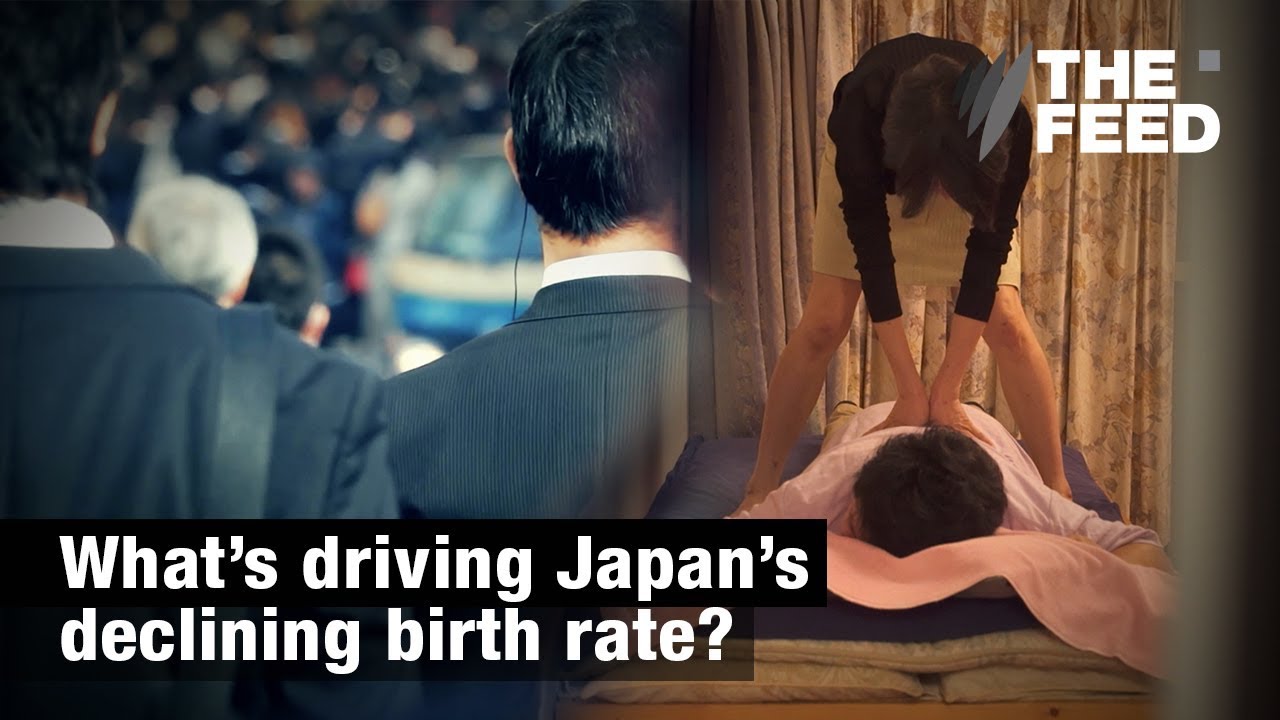
SBS current affairs program The Feed sent journalist Marc Fennell into Tokyo’s love hotels, host clubs and cuddle cafes for “Sex in Japan: Dying for Company,” a 2018 documentary that treats the country’s collapsing birth rate as a story about intimacy gone missing, not just economics. The numbers Fennell dug up are stark enough on their own — but the report’s real find is what young Japanese people are doing instead of dating.
- Roughly 45% of unmarried Japanese men and women aged 18 to 34 report being virgins, and up to 70% of unmarried millennials aren’t in any romantic relationship.
- Japan’s fertility rate sits around 1.4, well below the 2.1 needed to hold the population steady, and forecasts cited in the report warn the population could shrink by a third by 2060.
- Fennell documents a booming substitute economy — host and hostess clubs, cuddle cafes, otaku subcultures and the Nintendo dating simulator Love Plus — built around companionship without the commitment.
The Numbers Behind “Celibacy Syndrome”
The term at the center of Fennell’s reporting is sekkusu shinai shōkōgun — “celibacy syndrome” — a phrase Japanese researchers coined to describe a generation opting out of romantic and sexual relationships altogether. It isn’t framed as a personal failing in the documentary so much as a structural one: exhausting work hours, stagnant wages since the post-bubble years, and a dating culture that never adapted to a country full of tired, broke twenty- and thirty-somethings.
Japan’s grueling corporate culture gets direct blame in the report, including the phenomenon of karoshi — death from overwork — as a symptom of just how little room is left in daily life for courtship. Readers wanting the fuller picture of that work culture can see it laid out plainly in CNBC’s explainer on why Japan works so hard, which covers the same overtime norms Fennell finds squeezing out dating and family life.
Rigid Roles, Reluctant Marriages
Fennell’s interviews point to gender expectations as a second major driver: career-oriented Japanese women describe marriage as a trade-off they’re increasingly unwilling to make, given how little domestic and workplace roles have shifted to accommodate two working partners. That reluctance shows up directly in the marriage statistics the documentary cites, and marriage remains the near-exclusive gateway to childbearing in Japan, so a drop in weddings translates almost one-to-one into a drop in births.
Up to 70% of unmarried Japanese millennials are not in any romantic relationship at all.
The Rise of Substitute Intimacy
Where the documentary gets its sharpest material is in the commercial workarounds Japan has built for people who still crave company but won’t or can’t pursue it conventionally. Fennell tours host and hostess clubs, where clients pay by the hour for conversation and flattery, and cuddle cafes, where physical touch itself is the paid-for service. He also spends time with otaku subculture figures whose primary emotional attachments run through fictional characters rather than people.
The starkest example is Love Plus, the Nintendo simulator where men carry on ongoing “relationships” with animated avatars — taking them on virtual dates, remembering their birthdays, even carrying handheld consoles around so as not to leave their digital partner alone. For a country debating capsule hotels and micro-living as adaptations to space and cost pressures — the same forces covered in this look at what a Japanese capsule hotel is really like — a video-game girlfriend that never asks for more space, more time or more money fits an unmistakable pattern.
Long Term Implications of Data
Fennell’s reporting frames all of this against Japan’s demographic clock: without a reversal, the country is on pace to lose a third of its population by 2060. Government incentives for childbearing and childcare exist, but the documentary’s on-the-ground interviews suggest money isn’t the core blocker — exhaustion, social anxiety and a fear of commitment are. That’s a harder problem to subsidize away than a fertility rate spreadsheet might suggest.
Sex in Japan: Dying for Company ran on SBS’s The Feed in 2018 and has kept circulating online well past its original air date, largely because the cuddle-cafe and Love Plus footage keeps getting rediscovered by new viewers. Fennell’s closing interviews leave the fertility numbers exactly where they started — no fix in sight, just a country getting more comfortable paying for company instead of finding it.</p








EarthRoamer LTi Interior Walkthrough
Is Star Wars Land Still Crowded? | New Stores, Single Rider On Smuggler’s Run & Friday The 13th Fun!
RV Tour ???? SOLO FEMALE Full Time RV Living in an Airstream Basecamp ???? with a Dog and Cat
Why does Japan work so hard? | CNBC Explains
WE DROVE OUR VAN 1,461 MILES ACROSS AMERICA