

 InfoSearched
Central Java hides the largest Buddhist monument on Earth, and Renata Pereira walks straight into the middle of it.
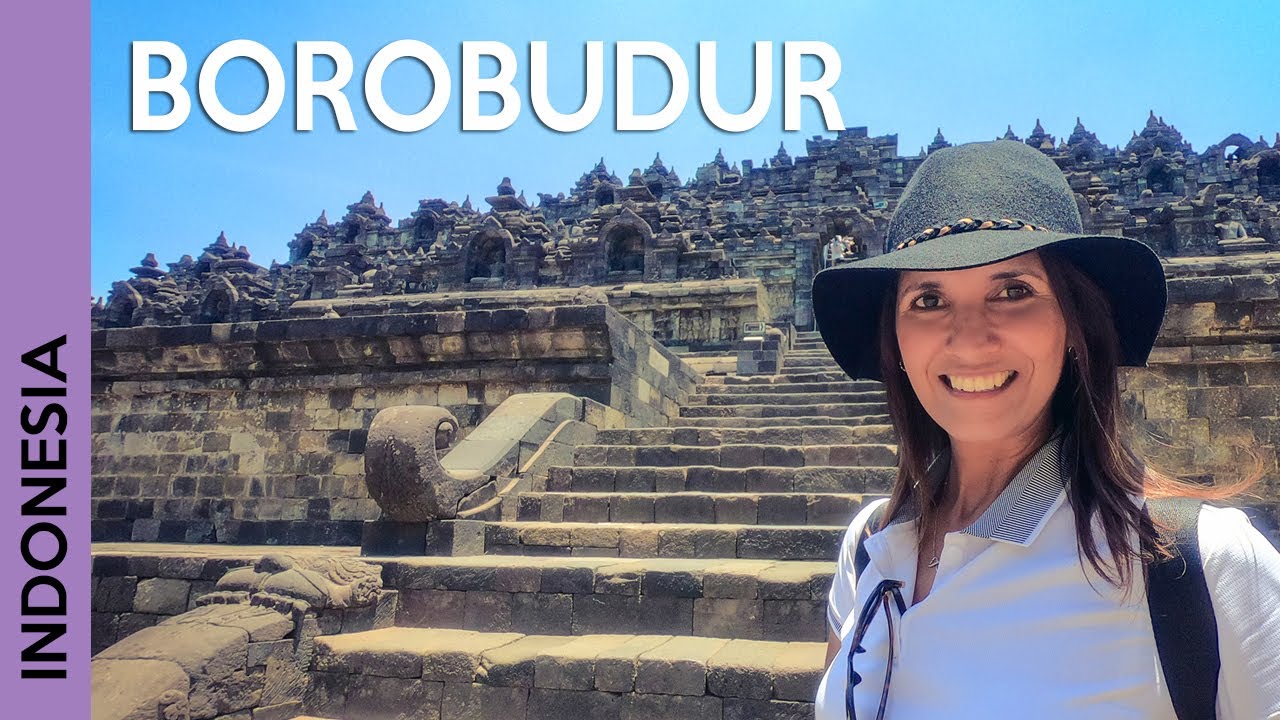
In her travel vlog on Candi Borobudur, journalist and content creator Renata Pereira tours the 8th- and 9th-century Mahayana monument in Magelang, roughly an hour and a half outside Yogyakarta. Built under the Syailendra Dynasty, the stone complex has been a UNESCO World Heritage site since 1991 and is widely recognized as the world’s largest Buddhist temple. Pereira filmed the visit before global travel lockdowns shut down that kind of trip entirely, and her footage doubles as a practical guide for anyone plotting the same route through Java.
- Borobudur was built in the 8th and 9th centuries under the Syailendra Dynasty and has held UNESCO World Heritage status since 1991.
- The monument holds 72 perforated, bell-shaped stupas on its upper circular terraces, part of a total of 504 Buddha statues and more than 2,500 square meters of carved bas-relief panels.
- Preservation today runs through Indonesia’s Law No. 11/2010, administered by the Borobudur Heritage Conservation Office alongside state enterprise PT Taman Wisata Candi Borobudur, building on restoration work UNESCO carried out through the 1970s and 1980s.
A Mandala Built in Stone
Borobudur isn’t a single building so much as a diagram of Buddhist cosmology that visitors climb through. The layout is a three-tiered stepped pyramid: a base, five square concentric terraces above it, and three circular upper terraces that narrow toward a single massive stupa at the summit. Pereira’s route through the site follows that same progression, moving from the broad, carved lower galleries up toward the open, circular platforms near the top, where the crowding of detail gives way to open sky.
The 72 Stupas and 504 Buddhas
The signature image of Borobudur is the ring of 72 perforated, bell-shaped stupas across the upper circular platforms, each one housing a seated Buddha figure visible through the latticed stone. Those 72 are only part of the count: the complex holds 504 Buddha statues in total, spread across niches and terraces, and more than 2,500 square meters of narrative relief carved into the galleries below. Pereira spends much of the video on that gallery-level detail, the kind of close-up stonework that’s easy to miss if a visitor rushes straight for the summit.
72 perforated stupas, 504 Buddha statues, more than 2,500 square meters of carved relief — Borobudur doesn’t ease you into its scale, it stacks it in front of you one terrace at a time.
Getting There From Yogyakarta
Pereira’s vlog treats logistics as part of the story, not an afterthought. Borobudur sits about 1.5 hours from Yogyakarta, making it a standard day trip for travelers based in the city, and she works through local etiquette and practical visitor guidance alongside the history. That kind of ground-level detail sits well next to other Indonesia coverage, including the Exploring Indonesia vlog and a trip further east documented in Eating with the World’s Most Isolated Tribe in Papua, Indonesia, both of which cover ground far outside the usual Bali circuit.
Protecting a 1,200-Year-Old Monument
None of what Pereira films exists by accident. Indonesia’s Law No. 11/2010 governs heritage protection at the site, with day-to-day management split between the Borobudur Heritage Conservation Office and state enterprise PT Taman Wisata Candi Borobudur. Those frameworks are aimed squarely at the two forces that threaten a monument this old: tourism pressure and weathering. The current structure is itself the product of a major reconstruction UNESCO carried out through the 1970s and 1980s, after the temple sat neglected for centuries before its rediscovery — meaning the version Pereira walks through on camera is a restored monument built to withstand exactly the kind of foot traffic her video is likely to generate.






California to New York: A Complete Road Trip
11 TIPS for saving money on Family Travel. Is travel TOO EXPENSIVE with kids?
How I Afford to Travel ???? + Tips for Traveling on a Budget
New Theme Park (20th Century FOX World?) Construction Progress – Genting Highlands Malaysia
What I Wish I’d Known Before I Went To Disney World