

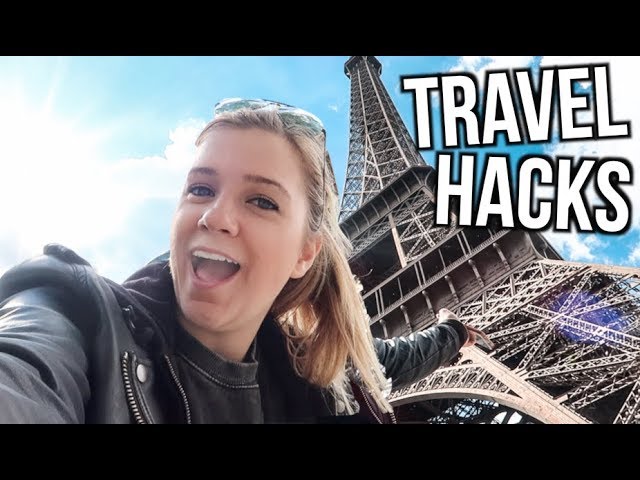
 InfoSearched
Shelby Church spent weeks bouncing across six European countries by bus — and came back with a list of the stuff nobody puts in the guidebooks.
Shelby Church and her friend Kiersten spent a few weeks last summer working their way through Europe on a shoestring, hopping intercity buses instead of trains to stretch their money further. Their route ran through Amsterdam, France, Italy, Spain, Belgium and Portugal, and the trip became the basis for Church’s video “15 Things They Don’t Tell You About Traveling In Europe.” Rather than another highlight reel of cafés and landmarks, the video is built around the friction points — burnout, budgeting, language gaps and the transit logistics that never make it into a travel brochure.
- Church and Kiersten crossed six countries — Amsterdam (the Netherlands), France, Italy, Spain, Belgium and Portugal — relying mainly on bus networks over trains to keep costs down.
- The video frames pacing as a survival skill, warning that jamming too many cities into a tight window leads straight to travel burnout.
- Church stresses learning basic local-language phrases once you’re outside major tourist hubs, where English fluency isn’t guaranteed.
Buses Over Trains, and What That Actually Saves
The backbone of Church and Kiersten’s trip wasn’t the Eurail pass most first-timers assume they need — it was the bus network. Intercity buses across Western Europe routinely undercut train fares by a wide margin, and for two travelers moving through six countries on a limited budget, that difference added up fast. The tradeoff is time: buses run slower and with fewer amenities than high-speed rail, which is part of why pacing becomes its own survival skill on a trip like this.
That budget-first mindset runs through the whole video, echoing the same math-it-out approach covered in HOW TO TRAVEL ON A SUPER TIGHT BUDGET!! — pick the slower, cheaper option and bank the savings for the things that actually matter once you land.
Pacing Yourself So the Trip Doesn’t Wear You Out
One of the most practical points in the video has nothing to do with money — it’s about not treating a multi-week Europe trip like a checklist. Church makes the case that cramming too many cities into too few days is the fastest way to burn out, turning what’s supposed to be a highlight of the summer into a blur of train stations and half-seen museums. Slowing down, even if it means seeing fewer stops, is presented as the difference between actually experiencing a place and just passing through it.
Unlike in the United States, where water is almost always free when you dine out, in Europe you’ll often be charged for bottled water — so bring a reusable bottle and fill it at public fountains instead.
That kind of small, specific detail is what separates the video from a generic packing-list post — it’s the sort of thing you only learn by getting stuck at a restaurant table without cash on you for a bottle of water.
Language, Culture and Getting Off the Main Route
Church’s advice on language is blunt: major tourist hubs will mostly get you by in English, but the moment you drift into smaller towns or the countryside, that safety net disappears. A handful of key phrases in the local language isn’t about fluency — it’s about not getting stranded when you need directions, a pharmacy, or a bus schedule explained. The video pairs that with a push to get out of the big capitals altogether, arguing that smaller towns and rural stops often deliver a more genuine sense of a country than another afternoon in a crowded Parisian or Roman landmark.
That same logic — pack light, stay flexible, expect the unexpected — is the connective tissue running through the whole list, and it lines up with the mindset covered in How I walked 2650 miles with a single backpack: the less you’re carrying and the fewer rigid plans you’re locked into, the more room there is to actually enjoy where you are.
By the time Church and Kiersten wrapped the loop through Amsterdam, France, Italy, Spain, Belgium and Portugal, the takeaway wasn’t a bucket-list photo dump — it was a working playbook for anyone about to book the same kind of multi-country summer run: bus it, pace it, carry less, and learn to say “thank you” in more than one language before you land.





Welcome to Bangkok, Thailand | DW Documentary
The Black Hills and Badlands of South Dakota: Outdoors and Cultural Attractions
EXPLORING ST. GEORGE, BERMUDA | TOBACCO BAY BEACH | TRAVEL VLOG
Hiking 40 Miles Alone on the Trans-Catalina Island Trail in California
4 Steps on How to Plan a Vacation on a Budget | Real Life Costa Rica Vacation Budget Breakdown