

 InfoSearched
Aviation-class comfort, capsule-hotel price, right on top of Namba Station.
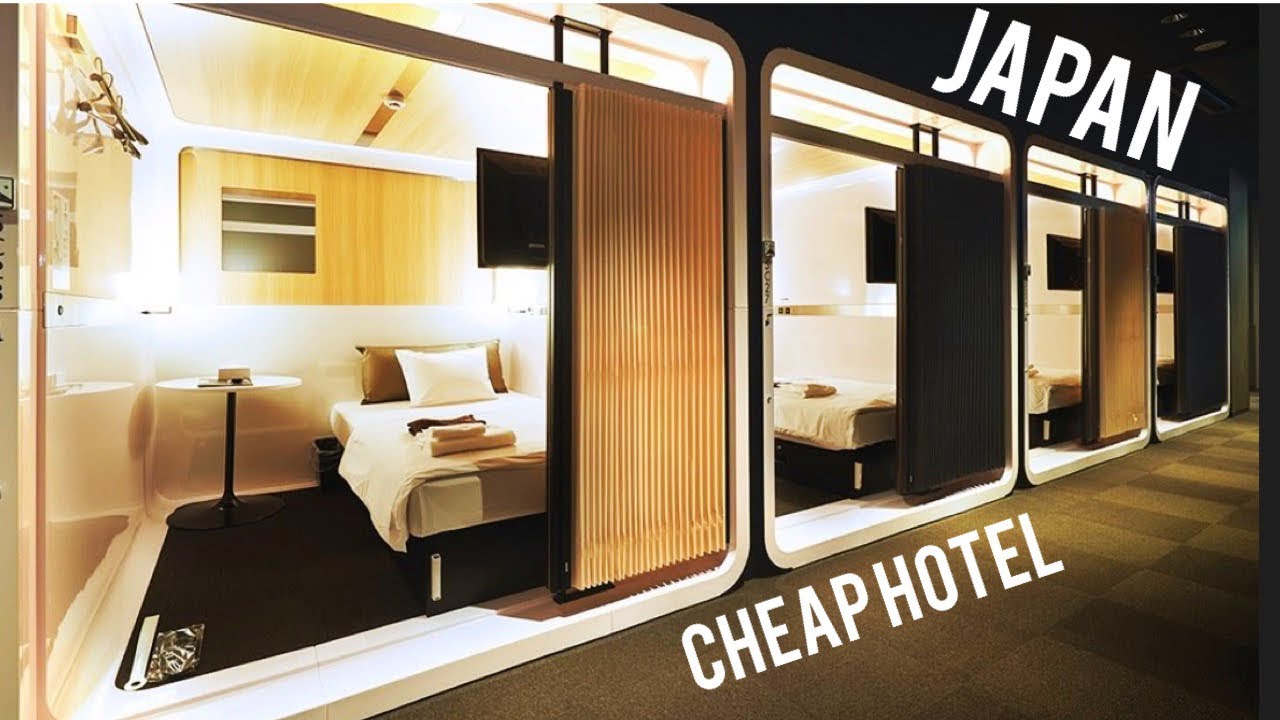
The channel I Will Always Travel for Food checked into First Cabin Midosuji Namba in Osaka for a single night to answer a question a lot of budget travelers ask before their first trip to Japan: is a capsule hotel actually livable, or just a novelty for the Instagram feed? First Cabin’s answer is a compact sleeping cabin styled after airplane cabin classes rather than the sealed fiberglass pods most people picture when they hear “capsule hotel.” The stay ran ¥3,500 a night, roughly $32 USD, for a bed in a building that sits directly above Namba Station in Osaka’s Chuo Ward.
- The room rate documented was ¥3,500 per night (about $32 USD) at First Cabin Midosuji Namba.
- The property has direct lift access to Namba Station and sits in the Namba-Midosuji Building in Chuo Ward, one of central Osaka’s busiest districts.
- Cabins use magnetic curtains or privacy screens instead of locking doors because Japanese lodging law classifies the partitioned units as shared space rather than private rooms; valuables go in provided secure lockers instead.
The Aviation-Class Concept
First Cabin’s whole pitch is built around the language of air travel. Instead of “capsule” tiers, guests book into cabin categories modeled on business class and first class, and the Midosuji Namba location applies that branding to a single-occupancy sleeping unit big enough to sit up in, store a bag, and actually relax rather than just crawl in and pass out. Each cabin comes with a flat-screen television and its own air conditioning control, which separates it from the stripped-down pod format most travelers associate with Japan’s original 1970s capsule hotels, a format covered in this network’s own Japan travel guide.
Hotel-provided nightwear and slippers are handed out at check-in, so guests don’t need to pack sleepwear for a one-night stop. That detail, combined with the TV and personal climate control, is what pushes First Cabin out of pure backpacker territory and into what the brand is actually chasing: a hybrid product between a budget capsule hotel and a boutique hotel, aimed at travelers who want central Osaka on a tight nightly budget without sacrificing basic comfort.
Curtains Provide Better Spatial Solutions
The most counterintuitive detail in the video is also the most Japan-specific one. First Cabin’s cabins don’t lock because Japanese lodging regulations treat these partitioned sleeping units as shared accommodation space rather than fully private rooms — the same legal classification that shapes traditional capsule hotels nationwide. That’s why the cabin openings use magnetic curtains or privacy screens instead of hotel-room doors, and why the property compensates with dedicated locking drawers or secure storage for phones, wallets, and passports.
¥3,500 a night, no lockable door, and still marketed as “aviation-class.”
Floors are separated by gender, which is standard practice across Japanese capsule and cabin-style hotels and addresses the obvious privacy concern that comes with curtain-only partitions. It’s a workaround that makes sense once you see the legal framing — the hotel isn’t cutting a corner on security, it’s operating inside a regulatory category built for shared-space lodging.
The Shared Facilities Carry the Experience
Because the sleeping cabins themselves are compact by design, First Cabin Midosuji Namba puts real investment into what’s outside them. The property runs large sento-style public bathing facilities and saunas, plus shared restrooms, lounge areas, and vending facilities — communal infrastructure that turns what could be a claustrophobic overnight into something closer to a boutique stay with a shared bathhouse attached, in the same spirit covered in this network’s look at sauna culture abroad. For a traveler paying $32 a night in the middle of one of Osaka’s busiest transit hubs, that combination of sento bathing and lounge space is doing a lot of the heavy lifting.
Location Is the Other Half of the Value
Namba isn’t just any neighborhood — it’s the transit and nightlife core of central Osaka, and First Cabin Midosuji Namba’s position directly above the station with lift access means guests can roll off a train and into the lobby without hauling luggage through street-level crowds. That proximity is part of why the rate reads as such a bargain: comparable proximity to Namba Station through a standard hotel would run several times the nightly price. It’s the kind of location-versus-cost trade-off that regularly comes up across this network’s coverage of Japan, including the broader look at Japanese work and lifestyle culture in why Japan works so hard.
What the video ultimately settles is the gap between expectation and reality: viewers picture a sealed pod stacked in a wall, and what they actually get at First Cabin Midosuji Namba is a curtained aviation-class cabin with a TV, its own air conditioning, and a sento bathhouse downstairs, all for less than the cost of a mid-range meal in most Western cities.




PARADISE BEACH IN EL NIDO, PALAWAN – NACPAN BEACH – PHILIPPINES TRAVEL
????Bora Bora – How Much it Cost for 6 days? Money Saving Tips! ????
Road trip & Things to do in Quebec, Canada (Great Trail & Outdoor activities)
Mt Olympus Water Park Theme Park Resort Wisconsin Dells Hotel Rome Go Karts Wave Pool Coaster Hades
Hawaii 2017 – A Trip Through Paradise