

 InfoSearched
Bangkok doesn’t pause for its close-up — this documentary just catches it mid-stride.
Thailand’s capital has never been an easy city to sum up in one frame, and DW Documentary’s “Welcome to Bangkok, Thailand” doesn’t try. Instead it moves between gilded temple spires, narrow Chinatown lanes, and glass office towers, letting the contrasts do the talking. The film treats Bangkok less as a checklist of landmarks and more as a living, sweating, honking organism that’s outgrown its own infrastructure.
- The documentary pairs Bangkok’s landmark temples — Wat Phra Kaew (Temple of the Emerald Buddha) and Wat Arun (Temple of Dawn) — with the tangled backstreets of Yaowarat, the city’s historic Chinatown district.
- It profiles two of Bangkok’s defining commerce hubs, the sprawling Chatuchak Weekend Market and the after-dark Talat Rot Fai (Train Night Market), as proof of how the city trades round the clock.
- Beyond the postcard shots, the film addresses the city’s real growing pains: gridlocked traffic, an overloaded transit system, and waste management strain from a metropolis absorbing heavy tourist volume year-round.
A City Built on Contrasts
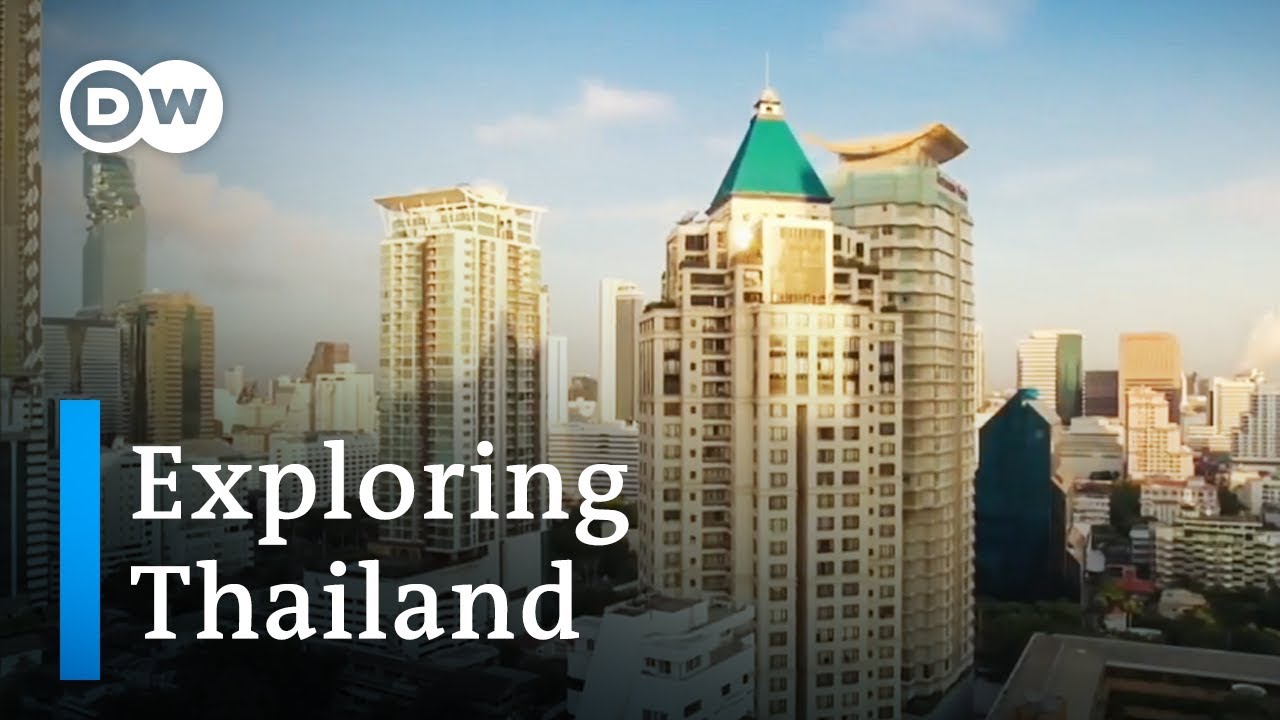
The film’s throughline is Bangkok’s nickname, the “City of Angels,” and how uneasily that royal-era name sits atop a 21st-century sprawl of megamalls and high-rises. What began as the seat of Thai royal power has become one of Southeast Asia’s largest urban centers, and the documentary keeps cutting between the two versions of the city — ornate heritage sites in one shot, glass-and-steel skyline in the next — without pretending one has replaced the other.
Temples and the Old City
Wat Phra Kaew and Wat Arun anchor the film’s look at Bangkok’s sacred architecture, their gold spires and porcelain-tiled prangs offering the visual counterweight to the traffic and neon elsewhere in the runtime. From there the camera drops into Yaowarat, Bangkok’s Chinatown, where the alleys narrow into a maze of shopfronts, gold merchants, and street stalls that predate most of the skyline outside them.
Markets After Dark
Commerce is where the documentary spends real time. Chatuchak Weekend Market gets framed as the city’s daytime bazaar — thousands of stalls under one roofless sprawl — while Talat Rot Fai, the Train Night Market, is the after-hours version, vintage cars and vendor stalls lit up once the sun goes down. Between the two, the film argues Bangkok never really closes.
Street Food as the City’s Language
Food carries the film’s most specific detail. Vendors serving som tum, the pounded spicy papaya salad that’s practically a Thai national dish, share screen time with stalls turning out crispy duck and regional desserts, all cooked within arm’s reach of the customer. The documentary uses these encounters — locals and travelers eating side by side at plastic tables — to make its point about Thai hospitality more directly than any narration could.
Bangkok doesn’t sleep — it just changes which market is open.
Growing Pains of a Megacity
The film doesn’t skip past what it costs to run a city this size. Automotive traffic gridlock gets its own stretch of footage, transit infrastructure is shown stretched thin against demand, and waste management is flagged as an unresolved public-works problem as Bangkok tries to keep pace with the sheer volume of international visitors passing through it every year. It’s the one part of the documentary that reads less like a travel reel and more like a warning label — the same tourist crush drawing people to the temples and night markets is the crush the city’s roads and services are struggling to absorb.
For anyone plotting an actual trip rather than just watching one on YouTube, the practical groundwork — visas, seasons, getting between the temples and the markets without losing half a day to traffic — is exactly the kind of thing covered in HOW TO TRAVEL THAILAND, which picks up where the documentary’s postcard shots leave off. And for a sense of how a neighboring Southeast Asian capital is handling the same growth-versus-infrastructure squeeze, the National Geographic feature City of the Future: Singapore makes a useful side-by-side.



Abandoned 6 -Star Resort in Thailand – S3E02 vlog
Should YOU Take a CRUISE? One week in the CARIBBEAN
Top 5 Beaches for Families – Travel Channel
How I walked 2650 miles with a single backpack
FIRST TIME BACKPACKER // Appalachian Trail // MY EXPERIENCE