

Living Off Grid in a Yurt | Solar Panels with Batteries | Harvesting Rainwater Off Roof – Ep. 39
 InfoSearched
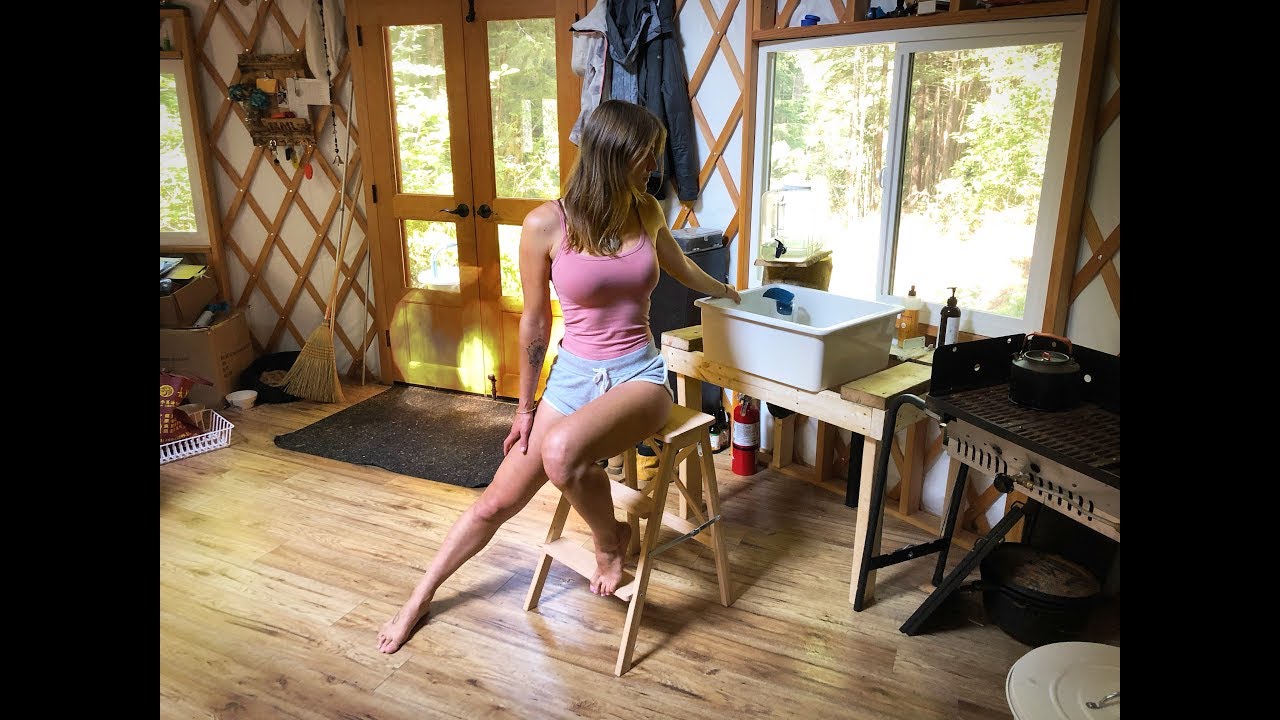
A couple ditches the power grid for a Pacific Yurt deep in the British Columbia bush.
Jake Mace and Nicolle didn’t move to Vancouver Island to be near anything — they moved there to get away from it. Episode 39 of their Off Grid w/ Jake & Nicolle series takes viewers inside the utility systems that keep their round Pacific Yurt running in Black Fish Hollow, a stretch of coniferous forest where the nearest outlet is however many miles back to the mainland. No power company, no municipal water line — just a solar array, a battery bank, and whatever rain falls on the roof.
- The yurt sits on a custom-built, raised wooden platform the couple constructed themselves before assembling the circular Pacific Yurt kit on top of it.
- Their electricity comes entirely from an off-grid solar panel array wired to a battery bank, with no backup connection to a utility grid.
- They collect their fresh water by harvesting rainwater runoff directly off the yurt’s fabric roof canopy, then filtering and storing it for domestic use.
Building on a Raised Platform in Black Fish Hollow
Before a single yurt pole went up, Jake and Nicolle had to solve the ground problem. Vancouver Island’s Pacific Northwest terrain is wet, uneven, and thick with root systems, so a yurt can’t just sit on dirt. The couple framed and built a raised wooden platform by hand in the forest clearing, then transported and assembled the Pacific Yurt kit on top of it — a circular structure designed for exactly this kind of remote, weather-heavy setting.
The platform does double duty: it keeps the yurt’s canvas walls off the damp ground and gives the couple a level base to run their utility lines beneath the floor, out of sight and out of the weather.
Solar Panels and a Battery Bank Doing All the Work
With no grid connection anywhere near Black Fish Hollow, the entire electrical load for the homestead runs through an off-grid solar panel array feeding a battery bank. The episode walks through the practical side of that setup — how the panels are positioned to catch what light filters through the canopy, and how the battery bank stores the charge so the couple isn’t left in the dark on overcast Pacific Northwest days, which in this part of British Columbia are not rare.
It’s the same core problem every off-grid builder in a similarly rugged spot ends up solving, whether it’s a converted expedition vessel like the setup shown in this custom-built off-grid expedition yacht tour or a fixed structure in the woods: generate enough, store enough, and don’t run out before the sun comes back.
Harvesting Rainwater Off the Yurt Roof
Vancouver Island doesn’t lack for rain, and Jake and Nicolle built their water system around that fact instead of fighting it. The episode details how they collect runoff directly off the yurt’s fabric roof canopy, channeling it into a filtration and storage setup capable of supplying their day-to-day domestic needs in a climate that swings between soaking wet and genuinely demanding.
The whole system is built around one idea: catch what the forest gives you, store it, and don’t depend on anything you can’t maintain yourself.
That self-reliance runs through every part of the build, echoing the same do-it-yourself instinct behind projects like the $15,000 DIY tiny house build — different structure, same philosophy of solving your own utility problems rather than paying someone else to do it.
Episode 39 is one installment in an ongoing series, and Jake and Nicolle have kept documenting the Black Fish Hollow homestead build piece by piece — power, water, and whatever system needs solving next on the platform they built with their own hands.





EXPLORING THE MOUNTAINS OF COLORADO! Summer Travel Vlog 2020
Boarding The LARGEST CRUISE SHIP IN THE WORLD! – Symphony of the Seas Inaugural Cruise
We Discovered the SECRET to VAN LIFE!
????️ The Top 10 things to do in Venice | WHAT to do in Venice & WHERE to go, by the locals ????????????
Overcoming Obstacles to Your New RV Life // How to RV Full Time