

 InfoSearched
An American food host climbs into treehouses 100 feet up to eat with a tribe that had almost no contact with the outside world until the late 1970s.
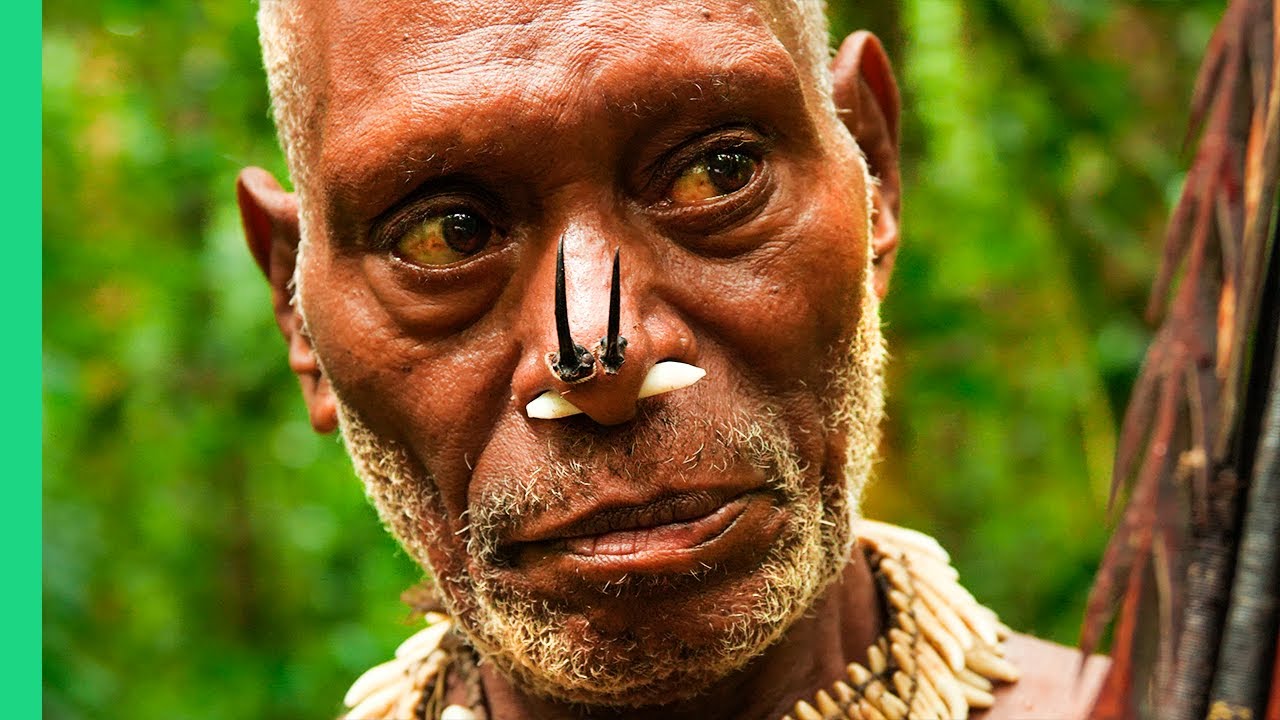
In August 2019, Best Ever Food Review Show host Will Sonbuchner — better known to his subscribers as Sonny Side — pushed his channel’s premise about as far as it can go, trekking into the rainforests of southeastern Papua, Indonesia, to eat with clans of the Korowai people. Known as the “Tree People” for the houses they build in the jungle canopy, the Korowai have lived largely apart from outside contact for most of their history, and Sonbuchner’s video “Eating with the World’s Most Isolated Tribe!!! The Tree People of Papua, Indonesia!!” documents what that isolation actually looks like on the ground — and up in the trees.
The episode follows the show’s usual formula of joining locals at their table, except here the table is a bark floor thirty meters off the forest floor and the menu is whatever the jungle provides that week. Sonbuchner eats alongside tribe members as they process their staple starch, fish the rivers, and hunt with bows built by hand, giving viewers a rare, close-up look at a subsistence lifestyle that has changed very little for generations.
- The Korowai had virtually no contact with the outside world until the late 1970s, and their homes are built 10 to over 30 meters above the ground using notched single-pole log ladders, bark floors, and palm-thatch roofs.
- Sago starch, harvested from felled sago palms and roasted over open fires wrapped in jungle leaves, is the core staple of the tribal diet featured in the episode.
- Sonbuchner eats fat sago palm weevil larvae — sago grubs — both raw and cooked, pulled directly from decaying palm trunks as the tribe’s primary protein source alongside river fish, wild boar, and native birds hunted with traditional bows and arrows.
Getting to the Table Means Climbing First
Before any food gets prepared, the episode makes clear that just reaching a Korowai household is its own ordeal. Homes are lashed together high in the canopy and accessed by single notched logs that function as ladders, with no railings and no margin for error. Sonbuchner makes the climb himself on camera, and the segment lingers on how normal this ascent is for tribe members carrying children, tools, and firewood up and down multiple times a day.
The elevation isn’t decorative — it’s practical, keeping families above flood-prone ground, insects, and predators in a rainforest with no roads, no clinics, and no infrastructure most viewers would recognize. That same isolation is what has preserved the building techniques and daily routines the video captures, largely untouched since outside contact with the Korowai began in the late 1970s.
Sago: The Staple That Runs the Whole Operation
The backbone of the Korowai diet, according to the episode, is sago — a starch extracted from felled sago palms. Tribe members show Sonbuchner the full process: felling the palm, pounding and washing out the starch, and roasting the result over open fire wrapped in jungle leaves. It’s carbohydrate-dense, plentiful in the surrounding forest, and requires no cultivation, which makes it the closest thing the Korowai have to a guaranteed food source in a landscape without agriculture as most viewers would understand it.
Protein comes from what the forest and rivers give up on a given day. The episode shows river fishing and traditional bow-and-arrow hunts targeting small jungle game, wild boar, and native birds — skills passed down rather than taught in any formal sense, and executed with a level of precision Sonbuchner visibly respects on camera.
Sago Grubs, Eaten Raw and Cooked
The signature food moment of the episode is the sago palm weevil larvae — thick, pale grubs harvested from the rotting trunks of felled sago palms. Sonbuchner eats them both raw, straight from the log, and roasted over the fire alongside tribe members who treat the grubs as a routine, high-value food rather than a curiosity.
The sago grub comes out of a decaying palm trunk and goes straight from the log to Sonbuchner’s mouth — raw first, then roasted, no ceremony either way.
It’s the kind of unfiltered food moment that separates the show from a standard travel vlog: no studio kitchen, no plated presentation, just protein pulled directly out of the log it grew in and eaten on camera the same way the Korowai eat it every day.
Isolation, Belief, and a Complicated History
The episode doesn’t shy away from the darker reputation attached to the Korowai — a history of revenge-driven killings tied to belief in “khakhua,” or male witches blamed for deaths within the clan. Sonbuchner addresses this as part of the tribe’s spiritual and ancestral worldview rather than treating it as shock content, and the video contextualizes how nascent cultural tourism and increased outside contact are already reshaping parts of traditional forest life even as core customs — the treehouses, the sago harvest, the bow hunts — persist.
For viewers of the channel who’ve followed Sonbuchner from street carts in Southeast Asia to markets across the globe, this trip into Papua’s rainforest sits at the far edge of what Best Ever Food Review Show has attempted — less a food tour than a documentary of a diet built entirely around what one patch of jungle can provide, filmed by a guy willing to climb thirty meters up a notched log to sit down and eat it.






Japan Revealed: Culture – Lonely Planet travel videos
City of the Future: Singapore – Full Episode | National Geographic
Travel To Bali 2019 | Family Travel Vlog
119 Day Cruise AROUND THE WORLD | MSC Magnifica Full Ship Tour
Visit Japan – 18 Culture Shocks Tourists Have in Japan