

 InfoSearched
The rides are long gone, but the ghost of a $120 million bet on family-friendly Vegas still sits behind the MGM Grand.
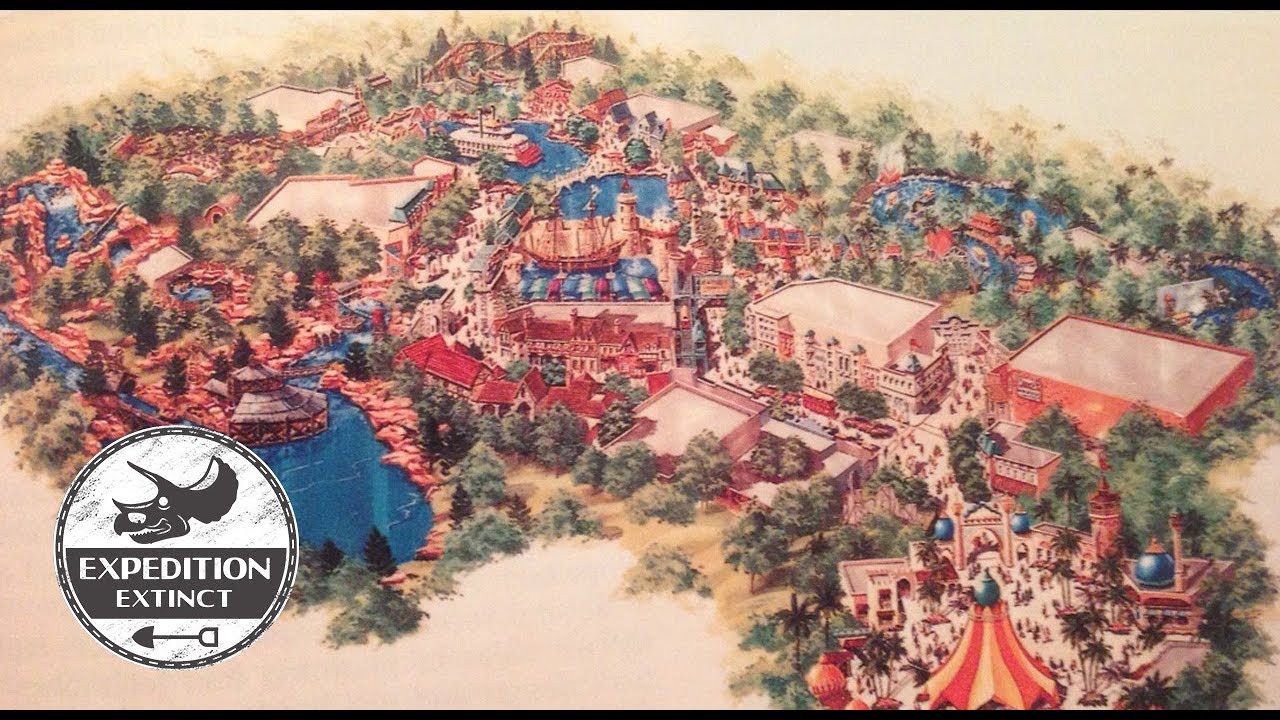
Before slot machines and pool cabanas took over the space, the land behind the MGM Grand Hotel and Casino housed a genuine theme park — one built during the brief window when Las Vegas tried to sell itself as a destination for kids, not just gamblers. Expedition Extinct’s “The Closed History of MGM Grand Adventures Theme Park” traces how that experiment opened big, shrank fast, and disappeared entirely within seven years of its debut.
- MGM Grand Adventures opened December 18, 1993, on 33 acres that had previously been the Tropicana Country Club, at a construction cost of roughly $120 million.
- A legal challenge from Disney over MGM branding pushed the park toward generic movie-genre theming instead of licensed characters, and by 1997 MGM had already carved 15 acres off the property for a pool complex and 380,000-square-foot conference center.
- The park closed to the public for good on September 4, 2000, and the land later became home to The Signature at MGM Grand condo towers (2006) and a Topgolf facility (2016).
A Studio-Themed Gamble Behind the MGM Grand
MGM Grand Adventures arrived in December 1993 as part of a citywide push to rebrand Las Vegas as somewhere families could bring their kids alongside the casinos. Backed by roughly $120 million in construction spending, the park sat on 33 acres directly behind the MGM Grand Hotel and Casino, ground that had previously belonged to the Tropicana Country Club.
Rather than leaning on recognizable characters the way Universal Studios or Disney-MGM Studios did, the park built its identity around movie production and genre theming — western sets, adventure serials, disaster-film staples — largely because Disney had legally challenged MGM over use of studio branding. That decision shaped everything from the park’s layout to its attraction names for the rest of its run.
Seven Rides Under a Vegas Sun
At its 1993 opening, MGM Grand Adventures counted seven primary attractions. The headline ride was the Lightning Bolt roller coaster, built jointly by Intamin and Arrow Dynamics. Guests could also float the Grand Canyon Rapids river-raft ride or cruise the Backlot River Tour, a boat attraction weaving through the park’s studio-lot sets. In 1994, the park added Deep Earth Exploration, a motion-simulator dark ride, alongside a rotating slate of live theater and stunt shows.
A $120 million theme park behind a casino, in the desert, going head-to-head with an air-conditioned dome across the Strip — the math never really worked.
That last part was the real problem. High initial ticket prices, brutal desert heat, and thin attendance ran into direct competition from the Adventuredome at Circus Circus, which offered the same family-entertainment pitch without making anyone stand in 105-degree sun waiting for a raft ride.
The Retreat to 18.8 Acres
By 1997, MGM Grand had already started cannibalizing its own theme park. Fifteen acres of the original footprint were repurposed to build a pool complex and a 380,000-square-foot conference center, shrinking the park by nearly 40 percent down to 18.8 acres. A year later, in 1998, management abandoned year-round operations entirely and switched to a seasonal summer-only schedule — a clear signal the numbers weren’t supporting full-time staffing and upkeep.
The final closure to general admission came on September 4, 2000, less than seven years after the park’s grand opening. MGM Mirage subsequently listed ride hardware for sale, dismantling the attractions piece by piece rather than mothballing them intact.
From Private Rentals to Topgolf
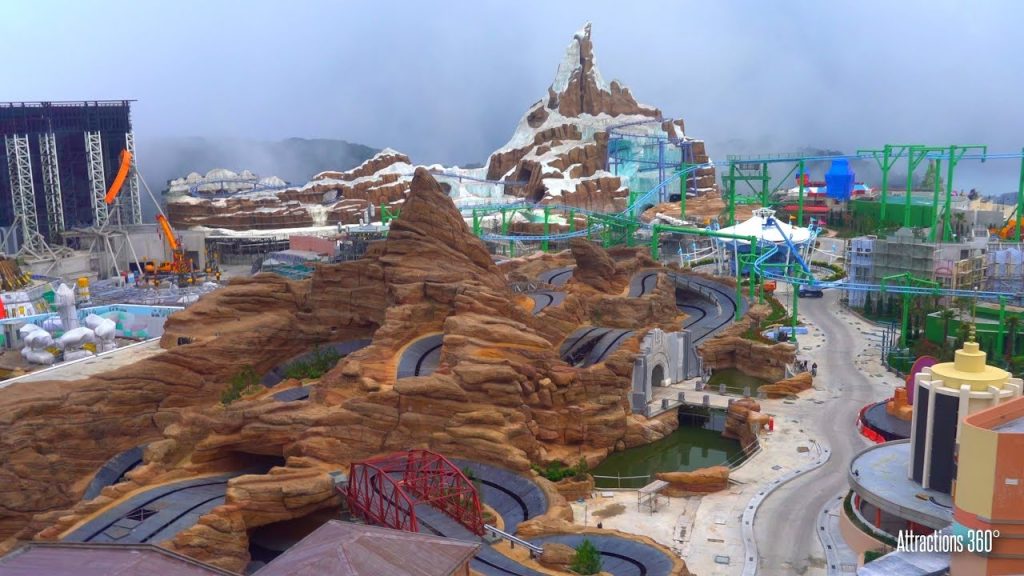
The site didn’t vanish overnight. Starting in 2001, the grounds operated as “The Park at MGM Grand,” a private-rental venue booked for corporate events and concerts rather than open to walk-up tourists, before that use eventually wound down too. Construction crews later broke ground on The Signature at MGM Grand, a set of luxury condo towers that opened in 2006, and in 2016 a Topgolf facility went up on the remaining parcel of land — closing the loop on a plot that’s now hosted a family theme park, a private event lawn, high-rise condos, and a driving range, all in roughly three decades. Anyone chasing this kind of vanished-attraction history has plenty of company; the same instinct that sends explorers into shuttered parks also drives fans to document existing ones, the way tourists now compare notes on newer trackless dark rides or debate whether a park like the one covered in Motiongate’s full ride tour can hold up long-term against Vegas-style attrition.
Whatever’s left of the Lightning Bolt’s steel is long scrapped, and the raft channel that carried the Grand Canyon Rapids is buried under condo landscaping and a Topgolf parking lot. Seven years of operation, one 40-percent footprint cut, and a permanent closure in September 2000 — that’s the whole life cycle of a $120 million bet that Vegas families would rather ride a coaster than play the tables next door.




Top 5 Beaches for Families – Travel Channel
31 INSANELY AFFORDABLE Budget Travel Destinations to VISIT NOW
The Ultimate VANLIFE GAMING Van Tour
Japan Revealed: Culture – Lonely Planet travel videos
Abandoned 6 -Star Resort in Thailand – S3E02 vlog